


Gun Myths Page 1
Recommended Websites
Non-Gamstop Casino Site
Non Gamstop UK Casinos
Best Betting Sites
Non UK Casinos not on Gamstop
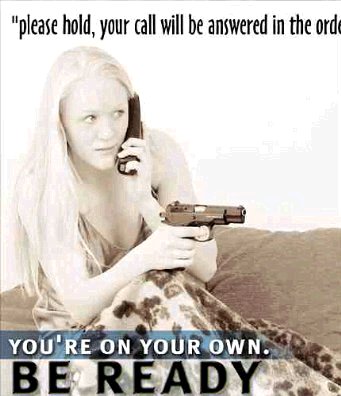
What is "concealed carry" and what effect does it have on crime rates?
"Concealed carry" is legislation that allows US citizens to obtain a permit from local law enforcement authorities to carry loaded handguns in public, provided they are hidden from view.
The requirements for obtaining a permit typically include no convictions for serious crimes or crimes of domestic violence and no history of mental instability. Concealed carry legislation started being passed throughout the US in 1987, the first state to have such a law being Florida.
As a result of this legislation rapes declined by 29 percent between 1992 and 2007 and robberies declined by 44 percent during the same period. The US murder rate also declined by a rate of 42 percent between 1991 and 2007.
The reason for this decline in violence is partly due to the fact that armed victims are fighting back and criminals know that they may be killed during a robbery or other crime if the person they target turns out to be armed. Tough sentences for murder and other violent crimes have also helped contribute to the decrease in violent crime.
(Source - Federal Bureau Of Investigation - 1989 - 2008 Crime Statistics )
(Source - Interview with Author John R Lott Jr ) (PDF File)
(Source - More Guns Less Crime by John R Lott Jr )
If the good guys have guns, then the criminals will have them as well.
Criminals will always have access to firearms if they want them. At the very most, all getting a gun requires is knowledge of the right pubs to visit. Any determined person (even young children) can get illegal firearms from local drug dealers and other criminal connections.
Put simply, guns are available in the UK to anyone who has the money to buy one.
Over the past few years the number of criminals carrying and using guns has increased dramatically, with violent shootings now happening on a daily basis and often involving innocent victims such as children.
If you're concerned about criminals being able to get handguns easily if they were legalised, you should be aware that with over 4 million illegal guns on Britain's streets, the problem of easy criminal access to guns is already here.
The important question now is - how do we protect ourselves from these people ?
(Source - Daily Mail - March 2008 and January 2009) (PDF Files)
(Source - Independent - September 2005) (PDF File)
People will use guns to resolve their disputes.
For years psychologists have been saying that only between 4% and
10% of all humans even have the capability of being criminals, and that only
about 2% to 3% are capable of inflicting violent crime. The rest of us
have normally-wired brains which simply do not allow us to harm one
another.
Law-abiding people can and should be trusted with guns, and the tiny minority that carry and use them illegally are the ones that should be targeted. Crime among firearm certificate holders in the UK has always been extremely low and any UK police force will confirm this if you contact them.
An armed citizenry, together with the re-introduction of the death penalty for murder would lead to a huge drop in the amount of alcohol related violence on our streets, as once a few drunken thugs have been hanged for murder or shot dead in self defence, the message will soon start to sink in.
Personally, I refuse to allow the mindless minority to dictate to me when, how and if I'm able to defend myself. I would much rather they be punished instead.
Very few concealed carry permit holders in America have been convicted of any type of crime involving the use of handguns and I see no reason why that wouldn't be the case here. All the warnings and talk of people "blowing each other away" over trivial incidents such as road rage have proven to be completely unfounded.
Disputes between law-abiding people very rarely end in any kind of violence because the overwhelming majority of people prefer to avoid confrontation where possible.
What's far more likely to happen is that people will become more polite, so as to avoid an angry confrontation with another armed citizen. This forms the basis of the saying that "An Armed Society Is A Polite Society".
(Source - Florida Division Of Licensing)
(Source - Texas Dept Of Public Safety - 2002 to 2007 Conviction Rates)
Passing tougher gun laws is the best way to deal with armed criminals.
No amount of legislation will stop criminals arming themselves with illegal weapons and using them to kill and injure innocent, law-abiding people. The reason for this is because criminals don't obey laws, that's what makes them criminals in the first place.
How can we possibly use laws to protect us from people that don't obey laws?
Britain's draconian gun laws are nothing more than a feel-good measure designed to give you a false sense of security. As you can see from watching the news, they do nothing to disarm criminals or stop them from acquiring guns illegally. When the law banning handguns was passed, it was used in such a way that you were basically led to believe that you are being kept safe.
The reality is that if you were attacked in the street or in your own home, you would now be completely defenceless against rapists or muggers that get around bans by simply ignoring them (like they do with other laws) and carrying weapons anyway.
Remember that someone who's willing to risk life imprisonment for murder by shooting or stabbing someone isn't going to be deterred by the possibility of a few years in prison for carrying a certain type of weapon.
A gun won't protect me from criminals.
In the United States, guns are used around 2,500,000 times each year in self-defence.
Of these instances, 15% of the people using a firearm defensively stated that they "almost certainly" saved their lives by doing so.
Even if the figures are exaggerated, and only 500,000 people actually defend themselves with guns each year, this still amounts to more than 75,000 lives saved annually, which is more than 6 times the amount of murders committed each year using guns.
In 83% of these successful gun defences, the attacker either threatened or used force first, proving that guns are very well suited for self-defence.
Of the 2,500,000 times citizens use guns to defend themselves, 92% merely brandish their gun or fire a warning shot to scare off their attackers.
Less than 8% of the time does a citizen wound his or her attacker, and in less than one in a 1000 instances is the attacker killed.
Firearms are actually used much more often to save lives than to take lives.
(Source - Media Bias Against Guns - John R Lott Jr ) (PDF File)
(Source - National Self Defense Survey - Florida State University)
Countries that have widespread gun ownership have high crime and murder rates.
This is a myth that has been stated as fact by the UK press for many years. It's true that the United States has more legal guns and more murders, but that's always been the case; armed violence was lower in the UK in the 1970's and early 1980's than is is today, and gun ownership was far more common back then.
Ciudad Juarez in Mexico and Phoenix in Arizona both have populations of around 1.5 million residents. Juarez has very strict gun laws, whilst Phoenix has much more relaxed gun laws. It may surprise you to learn that the murder rate in Juarez is approximately 9 times that of Phoenix, with Juarez suffering a much higher level of gun violence despite it's tough stance on gun ownership.
But what about the crime rates of other parts of the world ?
Between 25 and 30 percent of citizens in Switzerland own firearms, including handguns and semi-automatic rifles. Violent crime is very low in Switzerland, much lower then here in the UK. France, Germany and the Czech Republic also allow citizens to own and use guns in self-defence, and both of these countries have violent crime rates that are lower than that of Britain, so there is no proof that more guns means more crime.
In fact, relaxing gun laws in the US has helped reduce the crime rate as opposed to increasing it.
The crime rates of different countries are more complex than the simple availability of firearms. America's social problems, such as fatherless children, mass illegal immigration and the narcotics trade all contribute to the murder rate.
In any part of the world, you will find that armed violence is not linked to the number of legally held guns owned by decent law-abiding taxpayers that obey no smoking laws and pay traffic tickets. It's linked to the number of illegal guns owned by criminals, who don't obey gun laws no matter how strict they are.
Countries that ban gun ownership have low crime and murder rates.
Again, this is simply not true. Mexico has some of the world's strictest gun laws (in some cases even stricter than Britain) and yet Mexico has very high levels of gun homicide and gun violence, much higher than the rate in the United States. The northern city of Cuidad Juarez has such a huge gun violence problem that army help has been requested in a desperate attempt to restore order, because the police simply cannot cope.
The annual murder rate in that city has reached 133 per 100,000 inhabitants, more than 23 times the average US murder rate of 5.6, and that's with strict gun control laws.
Criminals in Juarez can kill people safe in the knowledge that their victims have no way of defending themselves. That's why crime is higher in Mexico - disarmed citizens make a criminal's job easier. You may also be unaware that Brazil and Jamaica also have far more gun violence and firearms homicide than America, despite much stricter gun laws.
Although Brazil has 100 million fewer citizens than the United States and far more restrictive gun laws, there are far more gun deaths per 100,000 people.
Other sources indicate that homicide rates in Brazil are approximately four times higher than the rate in the United States, so tough gun laws do nothing to prevent murder.
How many supporters of gun control have told you all this ?
(Source - Telegraph Newspaper - October 2009) (PDF File)
(Source - A Practical Guide To Mexico Gun Laws For Americans) (PDF File)
(Source - BBC News - September 2009)